
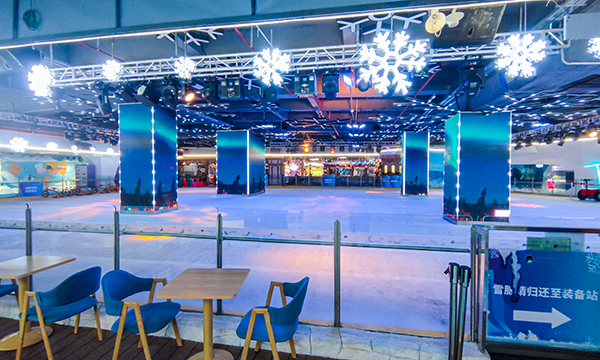
Weekend nights put ice quality under pressure. Hundreds of skaters, hard hockey practices and noisy parties can leave the surface gouged and dull. If it still looks like a mirror when you reopen, the resurfacer and its operator are doing their jobs. If it remains chewed up, customers notice quickly and the venue’s reputation absorbs the damage.
The chiller builds the ice, but the resurfacer rebuilds it, often 8 to 12 times a day, every day, for years. That makes purchasing a commercial machine an operational decision, not simply a comparison of sticker prices. As you review the ice and snow equipment range, focus on the surface it produces, the time each cycle takes and the support behind it.

A good resurfacer performs two precision operations in one pass. First, a sharp blade shaves 2–3 mm of damaged surface, removing gouges from hockey stops, skate nicks and debris dragged in from rubber flooring. This is millimeter-level shaving, not a cosmetic scrape. Blade condition and calibration therefore matter every time the machine enters the rink.
Immediately behind the blade, a water applicator lays an even sheet of 60–70°C water. The hot water fills micro-grooves and bonds with the cold base ice in a single pass, leaving a glass-smooth finish. A high-quality resurface should keep ice thickness variation across the rink under 0.5 mm.
Do not wait for skaters to report poor ice before checking the process. When resurfacings are too infrequent or the equipment is off, surface temperature uniformity can deteriorate by 1.5–2°C. That is when users begin describing the ice as sticky. Treat blade height, water temperature and travel speed as connected operating settings, not separate afterthoughts.
For indoor rinks, electric units are the long-term winner. They offer zero emissions and low noise, typically 65–72 dB. The purchase price runs 15–25% higher, but the venue saves on fuel, reduces HVAC exhaust load and avoids oil and belt changes. On that basis, the premium typically pays for itself in 3–5 years.
The important comparison is therefore total operating burden, not the invoice alone. Ask how the machine’s noise, exhaust and routine service requirements will affect daily use. When coordinating the purchase with wider indoor ice rink solutions, also check its route between the storage area and the ice, including service-door clearance. A machine that is awkward to move or maintain can erode the staff time you expected to save.
Working widths run from 1.8 to 2.5 meters, and bigger is not automatically better. Match coverage to rink area, operator access and the number of daily cycles before paying for a heavier unit.
| Rink area | Suitable working width | Operational effect |
|---|---|---|
| Under 800 m² | 1.8–2.0 m | 8–10 passes; easy to drive and fits standard service doors |
| 800–1,800 m² | 2.2–2.5 m | Heavy units; wider coverage reduces resurfacing time |
For an 800–1,800 m² rink, wider coverage can cut resurfacing time from 12 minutes to 7–8 minutes. Run that cycle 12 times a day and the saving amounts to roughly 290 extra prime ticket hours a year. The gain is valuable only if the machine still suits the building and the crew can operate it consistently.
Tank capacity deserves the same scrutiny. A 200 L tank needs more frequent refills on an 800 m² rink, while a 400–500 L tank covers 6–8 cycles without a refill. Fewer trips back and forth reduce operator interruption. Select width and tank capacity together rather than optimizing one while creating a bottleneck in the other.

The difference between suppliers often appears six months after delivery, when wear items need attention and the crew is still refining its technique. A low purchase price is little help if the resurfacer is idle during selling hours. Use these points as a practical procurement baseline:
Parts availability: Blade cartridges need replacement every 30–50 hours. Water pumps and applicator cloth are also wear items. A supplier able to deliver original parts to your venue within 48 hours can justify a brand premium, because every day of downtime costs real revenue.
Training depth: These machines are not plug-and-play. Operators commonly need 2–3 weeks to dial in blade height calibration, water temperature tuning and travel speed control. On-site commissioning and training by a senior technician help the venue reach top-tier ice quality in year one.
Warranty commitment: Treat 2 years on the core drivetrain and a minimum of 1 year on the whole machine as the floor for a manufacturer that stands behind its product. Confirm the terms before comparing competing offers.
Put response expectations, commissioning scope and wear-item supply into the purchasing discussion. This makes the supplier’s promises easier to compare and gives your operator a clear route to help when ice quality or machine availability slips.
Yangsheng Ice and Snow approaches resurfacer development from the project and service side. The company spent 15 years delivering turnkey ice rink projects, from 200 m² research chambers to 1,800 m² commercial mall rinks. That work included refrigeration engineering, construction and years of service and repair, providing direct exposure to what venues need after opening. You can see that broader delivery background in its ice and snow project cases.
Drawing on that field experience, Yangsheng developed its own all-electric commercial resurfacers with 1.8 m and 2.2 m working widths. They are built for high-volume commercial operation and have held up in conditions from Beijing winters to Guangzhou summers. The stated aim is to build them to the same standard as the rinks the company constructs while keeping the price aligned with a commercial venue’s ROI model. Learn more about Yangsheng Ice and Snow when comparing that background with a supplier that only sells equipment.

No. For rinks under 800 m², a 1.8–2.0 m machine is the sweet spot: 8–10 passes, easy driving, compatibility with standard service doors and no need for a dedicated storage bay. For 800–1,800 m² rinks, 2.2–2.5 m heavy units can justify their size through shorter cycles. Start with area and access, then compare time savings.
A busy commercial venue may resurface 8 to 12 times a day. The right schedule depends on the damage created by public skating, hockey and events, but infrequent work allows defects and temperature-uniformity problems to accumulate. Monitor the surface and adjust the routine before users complain, rather than relying only on a fixed clock.
Ask for original wear parts within 48 hours, on-site commissioning and operator training, and warranty coverage of at least 2 years on the core drivetrain and 1 year on the whole machine. Also discuss the 30–50-hour blade-cartridge replacement interval so that parts and staff planning begin before the machine arrives.
If you are planning a new rink or replacing an aging machine, contact Yangsheng Ice and Snow with your rink area, preferred working width and daily resurfacing routine. The team can discuss its all-electric 1.8 m and 2.2 m machines, commissioning support and the practical details needed to protect ice quality and commercial returns.