
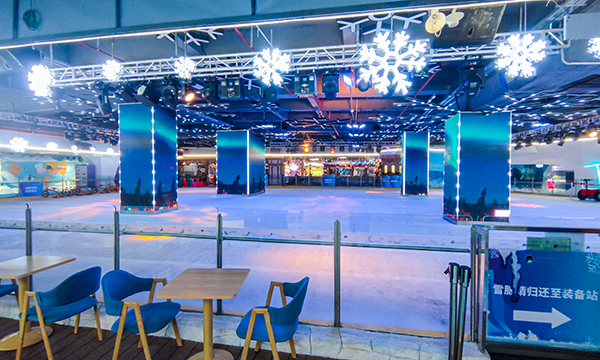
A mall rink can bring skaters into the heart of a commercial space, but the build cannot be allowed to take over the mall. The delivery standard described here is nine days from the trucks arriving to the first child skating, with the mall open throughout and its shop fronts and walking routes kept visible.
That schedule depends on decisions made before Day 1, not on rushing the refrigeration or the ice. As an engineer, I would treat floor recovery, uninterrupted trading and complete equipment reuse as design requirements. They shape every stage, from the protective layers under the rink to the training after handover.

The operating window for this delivery model is four months, summer only. Families are looking for indoor activities during that period, and the installation is removed when the season ends so it can move to the next venue. Nothing is permanent, welded or poured into the building. This is the commercial logic behind a seasonal rink: the same equipment can be redeployed rather than left tied to one site.
Before committing to that window, review the mobile ice rink system against the atrium, the reserved machinery area and the operating routes you must preserve. Do not treat delivery as a simple equipment drop-off. Mall management and the project team need to sign off three non-negotiables before work starts:
No damage to the existing space. The original floor, decoration and building structure must all go back to the condition in which they were found.
No disruption to daily operations. The mall stays open for the entire build, shop fronts remain visible, and shoppers keep walking through.
Full reusability. Every piece of equipment must come apart cleanly and be ready for redeployment at the next site; that is what allows a four-month seasonal rink to work financially.
The sequence protects the building first, then places the machinery and enclosure, and only then makes ice. It also keeps visual impact and future maintenance in the plan instead of leaving them until opening.
| Days | Work completed | Practical purpose |
|---|---|---|
| Days 1–2 | Lay moisture barrier film, then high-strength protective board before equipment arrives. | Separates the rink from the original floor and addresses condensation risk. |
| Days 3–4 | Position refrigeration units and the main control panel in a reserved side area; wrap piping in protective sleeves. | Keeps machinery out of sight and supports a cleaner, serviceable installation. |
| Days 5–6 | Install modular aluminum frames with high-transparency acrylic panels. | Meets the national ice rink safety standard without blocking views of skaters. |
| Days 7–8 | Commission refrigeration; freeze 2–3 mm layers individually until the ice reaches 25 mm. The first freeze takes 36 hours. | Builds the ice in controlled layers for a flat, hard surface. |
| Day 9 onward | Hand over a custom Daily Ice Maintenance Manual; a technician stays for two weeks of staff training. | Covers resurfacing, edging and emergency procedures so the local crew can take over. |
Two points in this sequence deserve particular attention. First, floor protection goes down before any equipment arrives, so later work never depends on an exposed original finish. Second, Day 9 is an operational handover, not the end of support. A technician remains on site for two weeks while the local team learns the rink.

The refrigeration units and main control panel sit in a reserved side area off the main atrium, not in the customer-facing rink. When assessing the ice rink configuration, reserve that space early; it keeps machinery out of sight while leaving it accessible for service. All piping between the machinery and the ice is wrapped in protective sleeves for a cleaner-looking installation.
The enclosure should not turn the attraction into a closed box. The modular rink barrier uses custom aluminum frames and high-transparency acrylic panels. It meets the national ice rink safety standard while allowing people in the corridor to watch the skaters. That visibility is part of the marketing value of a mall rink, so a visually heavy enclosure would work against the venue's objectives.
Ice making is equally deliberate. After the refrigeration system is commissioned, the rink is not flooded and frozen in one pass. Water is applied in 2–3 mm layers, with each layer frozen before the next, until the total ice thickness reaches 25 mm. The first freeze takes 36 hours. The result is an ice surface that stays flat and hard well past the standard most rinks accept.
Opening the rink does not remove the building variables. Mall atriums are open spaces, and HVAC, foot traffic and doors to the outside continually move the air around the ice. Cold air can spill onto the warmer mall floor and create condensation, turning the perimeter into a slip hazard. The response is practical: water-absorbent anti-slip mats around the rink and custom sealing strips along the bottom of the barrier. Together, these reduce the cold spill to almost nothing and address the wet-floor problem.
Ice maintenance also needs a mall-specific schedule. Lighting, HVAC and the constant movement of people past the boards add heat and break the surface down faster than in a purpose-built arena. Maintenance therefore runs roughly twice as often as it does at a fixed rink. Do not plan the opening and then hand an unprepared crew the keys; daily routines must reflect that workload.
Each handover includes a custom Daily Ice Maintenance Manual written for the actual rink layout. During the two-week on-site period, the technician takes staff through resurfacing, edging and emergency procedures. The objective is straightforward: by the time the technician leaves, the venue's own crew can run the rink and keep up with the maintenance schedule without continuing dependence on the installation team.

Yes. The build is planned around uninterrupted daily operations. Shop fronts remain visible, shoppers keep moving through the space, and equipment is tucked into a reserved side area. Floor protection is installed first, and the modular approach avoids permanent work to the building.
It is dismantled and moved to the next venue. The equipment comes apart cleanly for redeployment, and nothing is welded or poured into the building. The original floor, decoration and structure are returned to their prior condition, which is why the upfront protection and clean disassembly requirements matter.
A mall is a less controlled setting than a purpose-built arena. Lighting, HVAC and foot traffic past the barriers add heat, while outside doors and open atriums disturb the air. The surface breaks down faster, so maintenance is roughly twice as frequent as at a fixed rink. The manual and two weeks of training prepare the local crew for that reality.
If you are planning a summer activation, start with the operating window, floor-recovery requirements and a build sequence that keeps trading uninterrupted. Yangsheng Ice and Snow provides full-service ice and snow venue design, refrigeration system construction and turnkey project delivery. Speak with the team about a mobile rink plan that protects your mall, prepares your operators and allows the equipment to be redeployed after the season.