
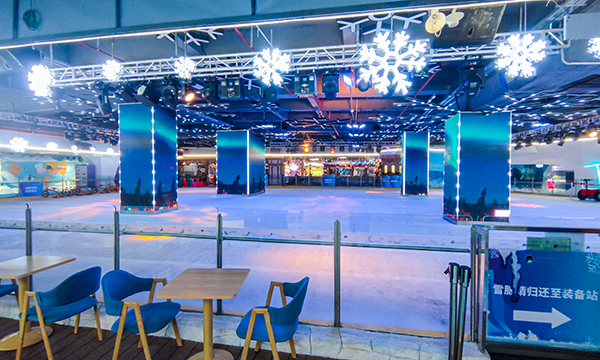
Building an indoor ice and snow venue is not simply a matter of installing refrigeration or snowmaking equipment. The venue brief, site conditions, construction sequence, system integration and later operation all affect whether the finished space works as intended. For a venue owner, the practical challenge is keeping those decisions connected.
Yangsheng Ice and Snow Technology, headquartered in Beijing, provides one-stop services for indoor skating rinks, ice and snow theme parks and year-round experience centers. Its scope runs from planning and design through construction, commissioning, and post-construction operation and maintenance.

Before discussing equipment, write down what the venue must do. Professional skating training, public ice and snow recreation, and year-round themed experiences are different briefs, even when they share similar attractions. An indoor rink may need to meet competition standards or serve public recreation; in both cases, constant temperature and humidity support the intended ice quality. A clear brief gives the design team something measurable to test decisions against.
Planning and design should combine site conditions with client requirements, then turn them into creative concepts and professional blueprints. When reviewing indoor ice and snow solutions, test each option against the following practical questions before fixing the technical scope.
Intended use: training, public recreation, snow play, or a year-round themed experience.
Site input: the actual conditions and constraints that the concept and blueprint must respect.
Visitor experience: the functions, attractions and ice or snow quality the venue is expected to deliver.
Operating expectations: the need for stable systems, efficient management and support after construction.
This early discipline keeps functionality and user experience in the design conversation. It also gives construction, equipment and commissioning teams a common reference, rather than allowing each stage to redefine the project.
A complex venue can lose clarity when design, construction and equipment decisions are handed from one party to the next without a shared objective. Yangsheng Ice and Snow Technology describes its service as lifecycle coverage: the same project logic carries from concept through long-term operation. The table below turns that scope into an owner’s checklist.
| Stage | Practical work | Intended result |
|---|---|---|
| Planning and design | Site conditions, client requirements, concepts and blueprints | Venue functionality and user experience |
| Construction management | Timeline and quality control by experienced teams | Efficient implementation |
| Equipment installation | Integration of refrigeration, snowmaking and environmental control systems | Stable, reliable performance |
| System commissioning | Meticulous tuning of energy use and operating efficiency | Smarter, more economical management |
| Operations and maintenance | Remote monitoring, regular inspections and emergency support | Worry-free, long-term operation |
For the owner, the useful question at each handover is not simply whether a task is complete. Ask whether its result still supports the original venue brief and the next stage. That approach makes timeline and quality control part of delivering a functional venue, not an administrative exercise.

The scenario should drive the design, not decorate it after the technical decisions are made. Yangsheng Ice and Snow Technology identifies three core venue types, each with a distinct operating purpose.
For indoor ice rinks, the brief may be competition standards or public recreation, with constant temperature and humidity used to support exceptional ice quality. For ice and snow parks, snow play, ice sculptures and slides can be integrated to create a family destination. The attractions and visitor experience therefore need to be considered together.
Year-round experience centers address a different opportunity: overcoming seasonal limitations and bringing northern winter fun to southern cities. If that is your market, use the concept stage to define the themed experience before selecting systems. Reviewing an ice and snow park concept alongside an indoor rink brief can also help clarify whether the project is primarily about skating, snow play, or a broader family visit.
Refrigeration, snowmaking and environmental control should be assessed as connected venue systems. Yangsheng Ice and Snow Technology integrates advanced systems from global suppliers during equipment installation, with stable and reliable performance as the stated objective. When reviewing ice and snow equipment, keep that integration requirement in the conversation rather than comparing machines in isolation.
The company’s technical expertise covers refrigeration insulation, environmental control and snowmaking technology. It also integrates energy-efficient and eco-friendly processes with the aim of helping clients reduce operational costs. For a venue owner, the practical point is to treat energy use and operating efficiency as commissioning and management issues, not as a slogan attached to the equipment list.
Reliable performance also depends on the earlier choices. A clear functional brief, coordinated construction and careful installation give the commissioning team a coherent system to tune. This is why equipment selection should not be separated from the venue’s intended use and later maintenance plan.

System commissioning is where the installed venue is tuned for operation. Yangsheng Ice and Snow Technology describes meticulous tuning to optimize energy consumption and operational efficiency, supporting smarter and more economical management. Owners should therefore treat commissioning as a distinct project stage, with the original functional and operating objectives still visible.
Support does not end at construction. The stated post-construction scope includes remote monitoring, regular inspections and emergency support. Together, these services are intended to make long-term operation more secure for the client and to keep expertise available after the venue opens.
At handover, keep the operating conversation practical: confirm how monitoring, inspections and emergency support fit the venue’s management routine. Then use the same venue brief to review whether the completed space delivers the planned ice, snow and visitor experience. This closes the loop between design intent and daily operation.
Yangsheng Ice and Snow Technology covers indoor ice rinks, ice and snow theme parks, and year-round ice and snow experience centers. The applications include professional skating training, public recreation and themed experiences, with the solution tailored to the scenario.
The end-to-end scope includes planning and design, construction management, equipment installation, system commissioning, and post-construction operations and maintenance. It also includes remote monitoring, regular inspections and emergency support for long-term operation.
The company combines expertise in refrigeration insulation, environmental control and snowmaking with energy-efficient and eco-friendly processes. System commissioning focuses on energy consumption and operational efficiency, while monitoring, inspections and emergency support continue after construction.
If you are planning a rink, snow park or year-round experience center, start with your site conditions, intended use and required service scope. Contact Yangsheng Ice and Snow to discuss a coordinated path from concept and construction to commissioning and long-term operation, and turn your venue brief into a clear project conversation.