
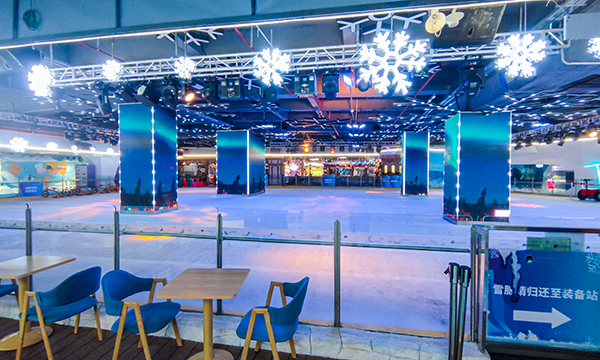
An indoor ice rink succeeds or fails long before the first ice is made. Floor capacity, waterproofing, insulation, refrigeration and ventilation must be designed as one system. If they are treated as separate purchases, the usual results are rework, delayed opening, poor ice and energy bills that undermine the venue’s operating plan.
Yangsheng Ice and Snow addresses those risks through prefabricated modularization, intelligent integration and turnkey delivery. Its stated core results are a 30% reduction in floor load-bearing requirements, 25% lower construction costs and energy consumption, and completion within 30 days. This guide explains how that programme works and where indoor ice and snow venue planning should begin.
Begin with an on-site survey, not an equipment catalogue. Yangsheng’s survey team checks floor load-bearing capacity, venue dimensions, water and electricity conditions, and ventilation. The intended use also matters: a competitive rink, family rink and commercial rink require customized design responses. These findings should drive the layout, refrigeration, insulation and lightweight structural decisions together, rather than leaving coordination until installation.
Load capacity deserves particular attention. Traditional indoor ice rinks typically require floor capacities of 550–850 kg/m², a range that floors in existing commercial complexes and office buildings may struggle to meet. Rather than waiting for a failed safety inspection, assess the floor first. Where capacity is insufficient, Yangsheng pre-plans a lightweight structure to reduce the need for extensive reinforcement. The design is developed to comply with GB/T 22517.8-2024 sports ice rink standards. Venue owners can review the Yangsheng ice rink solution alongside that technical survey.

The five phases below are not isolated trade packages. Each is overseen by a professional team, with design decisions carried through foundations, system installation, calibration and acceptance. That structure is central to keeping the work controllable and completing the rink within the stated programme.
| Phase | Programme | Work controlled |
|---|---|---|
| Preliminary survey and design | Days 1–3 | Site checks, usage brief, customized design and coordinated system planning |
| Foundation and site preparation | Days 4–10 | Leveling, waterproofing, insulation and frost-resistant treatment |
| Core system installation | Days 11–22 | Refrigeration, ice-making and fresh-air systems |
| Ice installation and calibration | Days 23–28 | Ice thickness, hardness, flatness, temperature and integrated testing |
| Acceptance and handover | Days 29–30 | Testing, documents, manuals, training and after-sales arrangements |
Days 4–10 deserve close supervision because foundation defects can appear later as cold leakage, water seepage, ice cracking and rising energy consumption. Yangsheng uses proprietary lightweight integrated insulation-waterproofing materials with a thin profile, combined with standardized construction methods. The site also receives frost-resistant treatment, including freeze-resistant concrete foundations designed for the required freeze-thaw cycle endurance. Do not treat this stage as simple preparation work: it supports structural weight control, cold insulation, waterproofing and long-term rink stability.
Core installation determines both ice quality and operating demand. Yangsheng combines high-efficiency refrigeration units, intelligent temperature control, modular ice-making components and a fresh-air system with three-stage filtration. The practical targets and functions to check are:
Ice temperature: precisely maintained between -2°C and -5°C, meeting national standards.
Heat recovery: waste heat generated during ice-making is recycled to reduce energy consumption.
Ice surface: standard thickness is 50 mm, adjustable to requirements, with flatness of ≤2 mm/3 m and hardness adjusted during calibration.
Air conditions: humidity is controlled between 40% and 60%, with circulation intended to prevent ice-surface fogging and frosting.
Installation method: modular prefabricated components enable rapid assembly and eliminate complex pouring processes while supporting construction efficiency.

At calibration, do not assess the refrigeration plant in isolation. The technical team adjusts ice hardness, flatness and temperature, then conducts integrated testing of refrigeration and ventilation. Intelligent ice-making equipment replaces traditional labor-intensive manual pouring and provides uniform, controllable thickness. Stable equipment operation and ice quality that meets operating standards are more useful acceptance criteria than appearance alone.
Ignoring the floor until construction is underway. A traditional design can exceed the floor limit, fail safety inspection and force costly demolition and reconstruction. The remedy is not automatic strengthening; it is early measurement, lightweight structural design and suitable materials. Yangsheng’s core technology reduces floor load by 30%, allowing sites with insufficient original capacity to accommodate a rink more safely while lowering initial renovation requirements.
Buying on initial price alone. Substandard materials and outdated refrigeration can shift an apparent saving into electricity, equipment failures, maintenance and weaker ice quality. Traditional indoor rinks can incur monthly electricity bills exceeding hundreds of thousands of yuan, so energy performance belongs in the investment decision. Yangsheng states that its solution cuts construction costs and energy consumption by 25%, using efficient refrigeration, waste heat recovery and durable prefabricated components. Its eco-friendly refrigerants exclude ozone-depleting substances in line with dual-carbon goals and industry environmental standards.
Losing control of the schedule. Traditional indoor ice rink construction typically spans 3–6 months. Complex processes and poor coordination can cause a venue to miss its preferred operating window. The five-phase prefabricated model addresses that risk through defined responsibilities, rapid assembly and integrated testing. When comparing proposals, check whether survey, foundations, systems, calibration and acceptance are all included rather than comparing opening dates alone.
Acceptance should cover ice quality, equipment operation, waterproofing and insulation, and load-bearing safety against national and industry standards. Handover includes technical documentation, operation manuals and professional training. Long-term support covers regular on-site inspections, equipment maintenance and prompt resolution of operational issues. Reviewing relevant ice and snow project cases can help frame those discussions, but the acceptance criteria still belong in your own delivery plan.
Possibly, but only a site survey can answer that properly. Compare the measured floor capacity with the traditional 550–850 kg/m² requirement, then examine lightweight structural options. Yangsheng’s 30% load-reduction approach may reduce reinforcement needs, but dimensions, utilities and ventilation must also be assessed.
Verify ice temperature, thickness, hardness and flatness, together with stable refrigeration and ventilation operation. The stated targets include -2°C to -5°C ice temperature, 50 mm standard adjustable thickness, flatness of ≤2 mm/3 m and humidity between 40% and 60%. Waterproofing, insulation and load-bearing safety also require acceptance testing.
No. The 30-day programme ends with acceptance, documents, manuals and staff training, not simply completed ice. Regular inspections, equipment maintenance and prompt operational support remain part of Yangsheng’s after-sales service, helping the venue move from construction handover into practical operation.
If you are comparing an indoor rink with a conventional build, begin with the floor, operating energy and complete acceptance scope—not a headline equipment price. Contact Yangsheng Ice and Snow to discuss a site survey, customized design and turnkey delivery, and align the 30-day programme with your venue’s technical and operating requirements.