A new ice rink can have a sound refrigeration system and a well-built slab, yet still create a poor customer experience because the accessories were treated as an afterthought. Skates that do not fit, protective gear that wears out, and decorative rather than functional boards all become operational problems after opening.
The better approach is to specify accessories as part of the rink’s operating plan. Before issuing purchase orders, decide who will use the venue, how rental will work, and which items need replacement stock. Coordinating these choices with the wider ice and snow equipment range gives you a package built around actual use rather than a collection of unrelated products.
Figure skates are the practical default for most public sessions. Their toe picks and stiff boots suit lessons, casual skating, and figure skating practice. For venues serving families, tourists, and first-time skaters, they are the easiest foundation for the rental rack.
Hockey skates serve a different user. A short, curved blade supports responsive turning and acceleration for ice hockey and training. Lower support and a steeper learning curve make them unsuitable for most beginners. Mixed public venues can carry both types, with the split based on coaching programs and customer profiles.
Speed skates are specialist equipment. Their low-cut boot and long, straight blade are for speed skating training, not general rental. Most public rinks need only around 10–15 pairs; serious skaters can bring their own or rent separately. A large general-rental inventory would tie up money in rarely used skates.
Size coverage matters as much as skate type. Carry children’s EU 26–35, women’s 36–40, men’s 41–46, and a few 47–48 pairs where foot traffic is heavy. Upper men’s sizes are the most likely to run out first, so omitting them creates a rental shortage even when the rack looks full.
Protective equipment needs its own sizing, replacement, and inspection plan. The basic rental set includes knee pads, elbow pads, wrist guards, helmets, and padded shorts for children learning to fall. These items are lost, stolen, and worn during normal use, so the opening order should include 20–30% more than the quantity you initially expect to need.
Carry separate adult S/M/L sizing and a youth sizing set rather than forcing one range to fit everyone.
Include padded shorts for children who are learning to fall, not only helmets and pads for the upper body.
Avoid toy-store pads for commercial rental; they can look acceptable but last only a week.
Plan extra wear replacements at purchase time instead of waiting for the rental counter to run short.
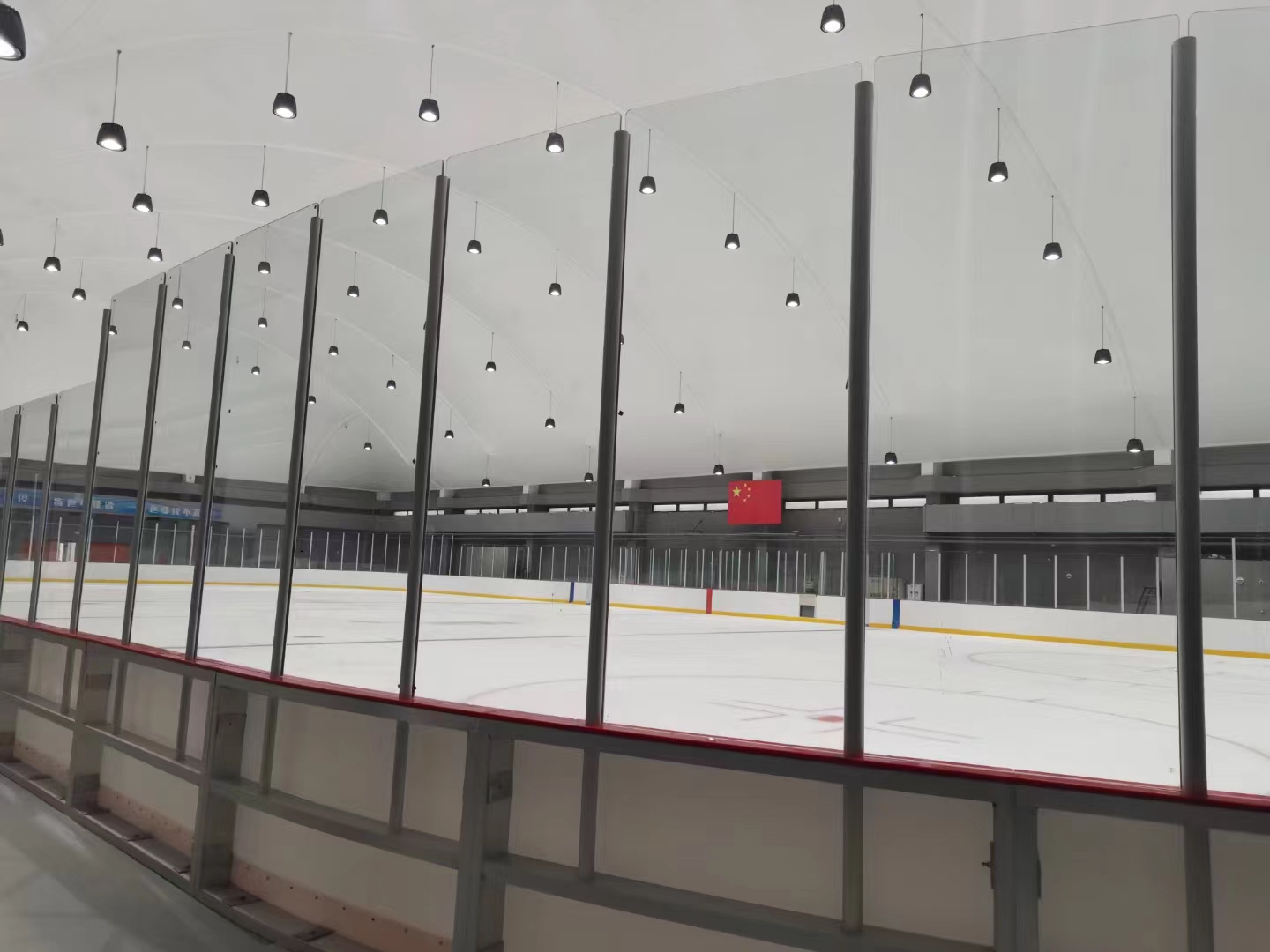
Dasher boards require the same discipline. NHL regulation height is 1.07 m, while commercial rinks in China typically use 1.0–1.2 m. The appropriate height therefore depends on the rink’s intended use, but the construction details should not be vague. Specify a steel frame, HDPE facing, a padded top rail, and rounded corner units at all four corners rather than 90-degree joints.
The kick strip also needs 50 mm-thick padding in the starter specification. Discuss these details with your rink barrier supplier before production, because board dimensions, corner construction, and padding are much harder to correct after delivery. The purchasing decision is about containment and daily use, not simply matching the rink’s appearance.

A numerical starting point prevents vague purchasing. For a 400–600 m² public rink, start with 50 pairs of skates, split evenly between figure and hockey models, plus 50 sets of protective gear. This is a reference inventory for that rink format, not a universal quantity for every venue; your target customers and operating model still determine the final mix.
| Accessory | Opening quantity or dimensions | Specification or allocation |
|---|---|---|
| Rental skates | 50 pairs for a 400–600 m² public rink | 50/50 figure and hockey; size groups in roughly a 3:4:3 ratio |
| Skate size groups | EU 26–35, 36–40, and 41–46 | Add a few 47–48 pairs for heavy foot traffic |
| Protective gear | 50 sets | Adult S/M/L in a 3:3:4 ratio, with separate youth sizing |
| Wear replacements | 10 knee pad sets and 10 padded shorts | Additional stock for replacement during operation |
| Dasher boards | Measured to the rink perimeter | 50 mm kick-strip padding and four rounded corner units |
The 3:4:3 skate-size allocation corresponds to children’s, women’s, and men’s ranges in that order. The protective-gear ratio deliberately carries more L sets than a buyer might expect because adults are heavier users. Optional consumables can include skate-sharpening tools, replacement blades, and rental cubbies. Coordinate these items with your indoor ice rink solutions so the rental counter, storage, and equipment list support one another.
Bundling skates, protective gear, and boards can improve more than the invoice. A full-package order typically prices 20–40% below buying the same catalog items across three vendors. That difference matters on a new build, but it should be evaluated alongside fit, delivery, and warranty terms rather than treated as the only reason to consolidate.
Logistics become simpler: one purchase order, one delivery window, and one contact. Sizes and quantities can be coordinated before shipment instead of reconciling three invoices and hoping that every shipment arrives before opening day. A single accountable supplier also gives you a clearer paper trail if an item is wrong or requires follow-up.
Fit is the less obvious advantage. A supplier that understands rinks can use your floor area and target customer—children, tourists, or a hockey league—to challenge the proposed mix. For example, 50 pairs might need to be 30 figure and 20 hockey rather than an automatic figure-skate-heavy order. Reviewing completed ice and snow project cases can help frame that discussion around venue use, not just unit price.

Do not build a commercial accessory package through retail e-commerce, one single-item order at a time. Retail prices run 2–3 times wholesale, with inconsistent size availability, batch-to-batch quality variation, and little support when something breaks. A low listing price is not useful if the delivered sizes cannot serve your customers.
Use a source-level supplier that can provide skates, pads, and boards together and arrange full-container delivery. Then lock the important decisions into the contract: sizing specifications, quantities, delivery schedule, and warranty terms. Confirm the skate-type split, youth and adult protection ranges, board perimeter, rounded corners, and replacement stock before production. This turns the bundle into an enforceable supply package with stable specifications and a defined contact if something goes wrong.
The reference opening plan is 50 pairs for a 400–600 m² public rink, divided 50/50 between figure and hockey skates. Allocate EU 26–35, 36–40, and 41–46 in roughly a 3:4:3 ratio, and add a few 47–48 pairs when foot traffic is heavy.
NHL regulation height is 1.07 m; commercial rinks in China typically run 1.0–1.2 m. Within that project-specific choice, specify steel framing, HDPE facing, a padded top rail, 50 mm kick-strip padding, and rounded units at all four corners.
Usually not. Speed skates are intended for speed skating training, so most public rinks can keep around 10–15 pairs and let serious users bring their own or rent on the side. Put the core rental budget into the figure and hockey sizes your customers will actually use.
If you are planning a new rink or correcting an incomplete accessory package, bring Yangsheng Ice & Snow your rink area, customer profile, and draft bill of quantities. Our team can help align skates, protective gear, dasher boards, delivery, and supporting venue systems into one practical procurement plan.