A property manager asks for a Christmas snow setup, and the first quote arrives for a six-figure, 80 dB machine built for a real ski slope. Put that unit in a six-story atrium and noise complaints could start before lunch. The specification is not simply excessive; it describes the wrong product.
A snow maker builds coarse, dense piste snow that can be packed hard enough to ski on. A snow effect machine is a visual prop: it releases 1–3 mm flakes that drift down and create atmosphere. When reviewing ice and snow equipment, specify the guest experience first. Snow makers do work; snow effect machines set the scene.
The confusion is expensive because the two products sit at different price and performance points. A snow maker uses a big motor, is loud, and starts at 100,000+ RMB. It belongs on a ski slope, not over a Christmas display. A snow effect machine is specified for appearance, coverage, noise and control—not for building a skiable surface.
Choose a snow maker when the required result is coarse, dense snow for a ski piste.
Choose a snow effect machine when the required result is falling snow for photographs, entrances, stages or themed décor.
Reject any quote that does not make that distinction clear; otherwise a visually simple brief can inherit ski-slope cost and noise.
For a mall event, themed restaurant or holiday display, the snow effect machine is normally the right tool. The engineering task is then to size and integrate that effect properly, not to make it behave like piste equipment.
Standard snow effect machines cover 20–100 ㎡ per unit, but that range is not a layout plan. Actual coverage depends on mounting height and ceiling clearance. A higher mount can widen coverage, yet the flakes also spend more time falling and a portion can melt in mid-air. Coverage therefore has to be considered together with the visual effect at floor level.
In a 6–10 m mall atrium, one machine covers roughly 50–80 ㎡. If the event area exceeds 200 ㎡, run 3–4 units in rotation. Alternating cycles give more even coverage than one machine blasting nonstop, and the rotation should be planned as part of the control scheme rather than improvised during the event.
Before requesting a final layout, measure the floor area and clear ceiling height, then mark possible floor and suspended positions. This is also where broader indoor venue planning differs from simply hiring a prop: unit count, placement and mounting must follow actual dimensions. A supplier cannot resolve those choices from a photograph of the atrium alone.
Use the following ranges to brief the project, then compare like-for-like scope. The prices are per unit, and the configuration matters as much as the headline figure.
| Configuration | Price per unit | Included approach |
|---|---|---|
| Basic | 80,000–150,000 RMB | Single-unit, standalone control |
| Mid-range | 120,000–250,000 RMB | Multi-unit linkable, variable snow output |
| High-end custom | 250,000–400,000 RMB | Low-noise, integrated control system |
Three items explain the price gap: the control system, from standalone to multi-unit networked; the noise level, from standard to silent; and the mounting, from floor placement to suspension with structural hardware. These are not minor accessories. A quotation that omits them cannot be compared directly with an integrated offer.
Ask upfront whether the price includes installation, mounting brackets and the control system. Some quotes look inexpensive until brackets and controls appear as add-ons; once everything is included, the apparently cheap option can cost more. Keep one comparison sheet showing unit price, controls, noise specification, mounting and installation for every proposal.
The use case determines where the machines should sit and what the floor, controls and fluid supply must handle. Common applications fall into several practical venue types.
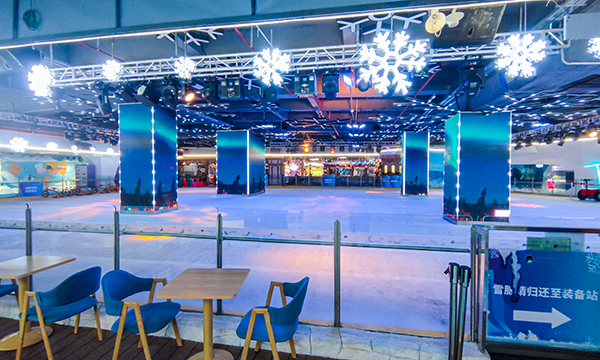
Holiday mall décor: Christmas, New Year and Spring Festival scenes in the atrium, with snowfall encouraging families to stop for photographs.
Themed hospitality: hotpot restaurants, ice cream shops and themed bars, where an entrance effect makes the frontage more interesting to passersby.
Snowfall entrance corridors: machines suspended along both sides between the mall entrance and main display, so visitors meet falling snow before anything else.
Stage effects: annual meetings, product launches and weddings, particularly when the snowfall is paired with stage lighting.
Education: science museums and ice and snow exhibits using the effect to show children how snow forms.
For stage use, the flakes are water-soluble and melt on contact, leaving no water stains when the correct snow fluid formula is used. A permanent attraction is a different brief: snow room options should not be specified or priced as temporary snowfall FX. Keep the visitor experience, operating period and technical scope clear before requesting equipment.
A machine can look impressive in a demonstration and still be wrong for an occupied mall. Check these five points before placing the order.
Noise. In a busy mall atrium, anything over 55 dB is likely to bother customers. Good machines run at 45–50 dB. Ask for the noise level in the quotation instead of discovering the problem after suspended installation.
Flake size. The standard is 1–3 mm. If the creative brief calls for a more realistic large-flake effect, consider a variable-frequency model that allows flake size to be adjusted.
Mounting. Suspended mounting looks better but requires a load-bearing assessment. Floor mounting is more flexible but occupies floor space. Confirm the preferred arrangement with property management early, including the structural hardware needed for suspension.
Drainage and floor protection. Some snow melts before reaching the ground, so the floor needs anti-slip treatment. Entrance corridors also need proper drainage or absorbent mats. A wet, slippery floor is a safety hazard, not a minor cleaning issue.
Snow fluid. The machine consumes a special fluid similar to bubble solution; it does not create an effect from nothing. A 10 L bucket provides about 4–6 hours of operation and costs 80–150 RMB per bucket. Stock enough before the event rather than treating consumables as an afterthought.

Plan 3–4 units in rotation. This gives more even coverage than continuous output from one machine. Base the final positions on mounting height and ceiling clearance; in a 6–10 m atrium, the working guide remains roughly 50–80 ㎡ per unit.
Yes. It uses a special snow fluid similar to bubble solution. Allow about 4–6 hours of operation from a 10 L bucket, at 80–150 RMB per bucket, and confirm that the formula suits the intended stage or venue use.
It is the wrong tool for that brief. A snow maker is loud, starts at 100,000+ RMB and is designed to build dense piste snow. A mall display calls for a visual snowfall effect, with coverage, noise, mounting and floor safety specified around visitors.
If you have venue dimensions and a concept, send them to Yangsheng Ice and Snow. With fifteen years in the ice and snow equipment business, the team can work out unit count, placement and mounting from actual ceiling height and floor area, without pushing equipment the venue does not need. Ask for a proposal that states noise, controls, installation and consumables clearly.